

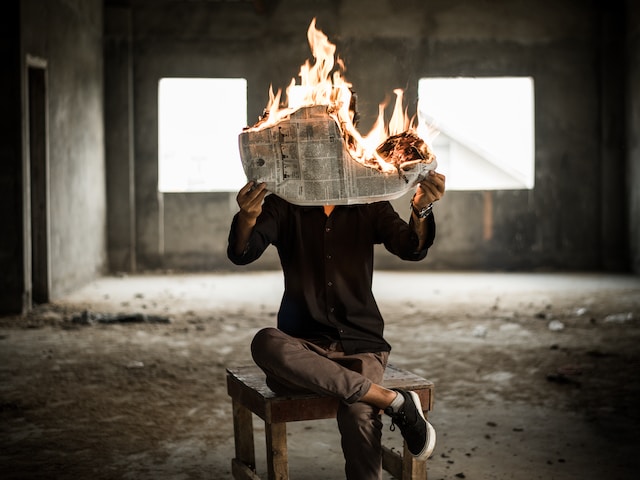









The temple of capital is cracking
ADD YOUR COMMENT >>
Imprimir print   Enviar send   Correct 
Source: Ventana Global
Umberto Mazzei
Wed Jul 25 2007

The World Bank was created to supply the capital necessary for the reconstruction of Europe and with the mandate of reducing poverty in other parts of the world with accessible loans. In the end, Europe was reconstructed with the Marshall Plan and in what concerns the World Bank loans, the attached conditions increase poverty and income disparity in the Third World. The Bank did have its boom with the external debt of developing countries, but the paradox is that the more they repay their debts, the more it sinks in bankruptcy.

The ignominious exit of Paul D. Wolfowitz of the World Bank and his pathetic negotiation with the Bank’s Board of a "Good Behaviour Certificate" – even when his lack of correctness was the talk of the world press - attires the regard to the International Bank for Reconstruction and Development, the official name of the World Bank

The Deficit

The World Bank, that fights fiscal unbalances with inflexible discipline, has a deficit of US$ 20 billions in the projects of the International Development Association – IDA - that is financial branch for developing countries. According to the Financial Times, the deficit occurs because the G-8 countries repaid – in 2005 - the debt of the Most Indebted Poor Countries (40 billions). This fact reveals that it is poor countries that actually finance the World Bank and not the other way around.

Before infamy, Wolfowitz had asked rich countries for bigger contributions, in order to compensate the "lost income" that kept the bank’s solvency. That "loss" was the payments of the most indebted countries and of other countries – Argentina, Brazil, Indonesia, South Korea, Venezuela - that had cancelled their debts and didn’t pay more interest on them. From places far apart the Global South – Bangkok - and the World Development Institute – London - both agree in the fact that for 20 years poor countries have financed the World Bank, while it is rich countries that contribute only 1/4 of total funds, who hold 3/4 of the votes(1).

The deficit did not start in 2005, as the Financial Times says. In a study of a period before 2005 by the Oxford University, Ngaire Woods analyses how World Bank interest income fell from US$ 8.1 billions (2001) to US$ 4.4 billions (2004) and investment income from US$ 1.5 billions (2001) to US$ 304 millions (2004).

Tha causes of ruin

As Hardev Kaur says in theYakarta Post(2), there have been dramatic changes in the Global Economy. There are new economic powers and the country with financial surplus after the war – the US – is now the biggest world debtor. The global economic changes have also seen debtor countries contributing 75% of the International Monetary Fund income and the US funding only an 18% of the IDA programme of the World Bank.

One big crack is in the relevance of the World Bank as a source for development financing. According to the New York Times(3), the bank own numbers show how the World Bank financial contribution to the poorest countries is only 7% of the total aid they receive. The rest comes from 230 agencies of international aid that include regional development banks, European special funds and soft loans – without conditions attached - from China (US$ 20 billions).

Another cause of ruin – an ironic one in an institution notorious for asking salary austerity to its client states - is the World Bank bureaucratic salaries expense. A note by Cato Institute says that the from 10 thousand bank employees, 1396 have higher salaries than the State Secretary of the US. A normal salary for level "G" – Ms. Riza(4) before promotion - reaches US$ 124.000. The following level "H" – Ms Riza after promotion - is of US$ 170.000. One 17% of the bank employees lives in that "arcHi" fortunate level.

The bureaucratic situation – continues the Cato Institute - is even sweeter. All those salaries are tax exempt for foreigners. US citizens do pay taxes because they work in US territory, but the bank reimburses them. Besides, bank employments are for life, since employees are fired only because some gross dishonesty or incompetence. It is clear that the bank seriously applies – to itself - the mandate to fight poverty.
There is an evaluation – commissioned by the bank – about research activities that have some revealing data(5). It shows that not withstanding that it is central to the Bank activity, research accounts only for 2.5% of the administrative budget. In contrast, the fraction for support of executive personnel is more than double. It concludes saying that "the future of the research activities in the Bank depends in developing a more stable support mechanism".

The adverse results

The original cause of World Bank and IMF policies are often forgotten. Both institutions rescued from bankruptcy – with taxpayer’s money - the big international banks that sold irresponsible loans to the Third World. Thousands of short term loans to place the rain of dollars(6) that followed the rise in oil prices and the ensuing "flotation" of the US Dollar in 1973, which meant that the US disavowed the Dollar’s gold convertibility ($38/oz.) solemnly guaranteed at Bretton Woods.

The docile debtor countries accepted the inflexible conditions of the World Bank & IMF in order to receive funds to pay their debts. Those austerity recipes are aimed at collecting loans and not at fostering development. It is not without reason that Robert Rubin – chairman of the executive committee at Citigroup and former Treasury Secretary - stated "The Bretton Woods system has become outmoded" but... "it has served us very well for a long time"(7).

The quoted World Bank self evaluation admits the inadequacy of its recipes when it warns(8): "Enormous problems can occur when not - very - robust research results are sold as irrefutable truths to the countries in the form of policy advice, technical assistance or as part of the conditionality of the lending programs".

Civil society, academia celebrities like Joseph Stiglitz, James Petras, Henry Veltmeyer(9) and many study groups have been, since long time, complaining that the World Bank is focused only in economic growth and is indifferent to unemployment and poverty. To make matters worse, growth – when it happens - occurs only in export oriented areas or privatized public utilities, which concentrates profit in very few people or makes public services more expensive.

Conclusions

As our conclusions over the vicissitudes of the World Bank we share the remarks by the Cato Institute in Washington, an eloquent conservative institution: The World Bank is a financial cripple, kept afloat by state warranties and disguised bailouts. Regardless of such a diagnosis, in parts of Latin America – Central America in particular - some governments still obey those dictates to socio-economic failure. The model to follow are those countries that starting from more precarious economic conditions are now ahead of Latin America in growth and poverty diminution: China, Vietnam, India, Malaysia. There is a policy they share: all have disobeyed each one of the rules in the World Bank recipe.

Wofowitz successor is Robert B. Zoellick, a loyal friend of international corporations. He was the US Trade Representative that managed CAFTA, but failed at ALCA and at the Cancun WTO Ministerial Conference. His distinctive feature is an authoritarian arrogance that doesn’t favour developing countries. His first public interventions are directed at supporting US aspirations –all in exchange of nothing - at WTO’s Doha Round negotiations.

Umberto Mazzei is director of the Institute of International Economic Relations in Geneva (Ventana Global) and member of the Mesa Global coalition in Guatemala.

References:

(1) - Membership is of 184 countries, but the Board is controlled by the Group of 7 countries (Canada, France, Germany, Italy Japan, UK, US) whose governments are sensitive to pressures by big international corporations.

(2) - Hardev Kaur, "World Bank, IMF feel the monetary squeeze", Jakarta Post, March 20, 2007

(3) - New York Times, May 23, 2007, 3 Global Financial Institutions' Roles Questioned

(4) - Intimate friend of Mr. Wolfowitz, et causæ scandalum.

(5) - An Evaluation of World Bank Research, 1998 – 2005. September 24, 2006, page 138.

(6) - Those were called "Petro-dollars" because it was a devaluation to nullify in fact the nominal rise of oil prices.

(7) - New York Times, quoted article.

(8) - Idem. Pag. 141.

(9) - James Petras y Henry Veltmeyer: El Imperialismo en el Siglo XXI; Henry Veltmeyer and Anthony O'Malley, Transcending Neoliberalism; Community-Based Development in Latin America.

share:  
Imprimir print   Enviar send   correct 
ADD YOUR COMMENT >>

Choike information
In-depth reports
Financing for Development
The opportunity that came up in Monterrey can turn into a road to nowhere without an injection of political will.
External debt
In the last two decades, the external debt has been a huge problem that third world countries have to face. This situation has generated a “spiral of poverty” where once inside it, is very difficult for developing countries to get out.
FTAA: a new colonialism?
The sovereignty of the countries and peoples of Latin America is at stake.
World Bank
The World Bank's main self-proclaimed objective is to eradicate poverty. Yet, evidence suggests that its programmes often harm the poor and the environment.
International Monetary Fund - IMF
The IMF is one of the most powerful international organizations. Its policies change the lives of millions of people in developing countries.
Economic, social and cultural rights - ESCR
ESC rights are valid, enforceable, justiciable and claimable under both local and international law. Civil society is campaigning for their full implementation.
World Trade Organization - WTO
Trade at the service of people, or people subjected to trade? The WTO makes the difference.
Millennium Development Goals - MDGs
A comprehensive list of resources from the United Nations and civil society organizations.

  IFIs Latin American Monitor
This area of Choike is possible thanks to the Mott Foundation
Choike is a project of the Third World Institute
www.choike.org | info@choike.org | Phone / Fax: +598 (2) 412-4224 | Dr. Juan Paullier 977, Montevideo URUGUAY